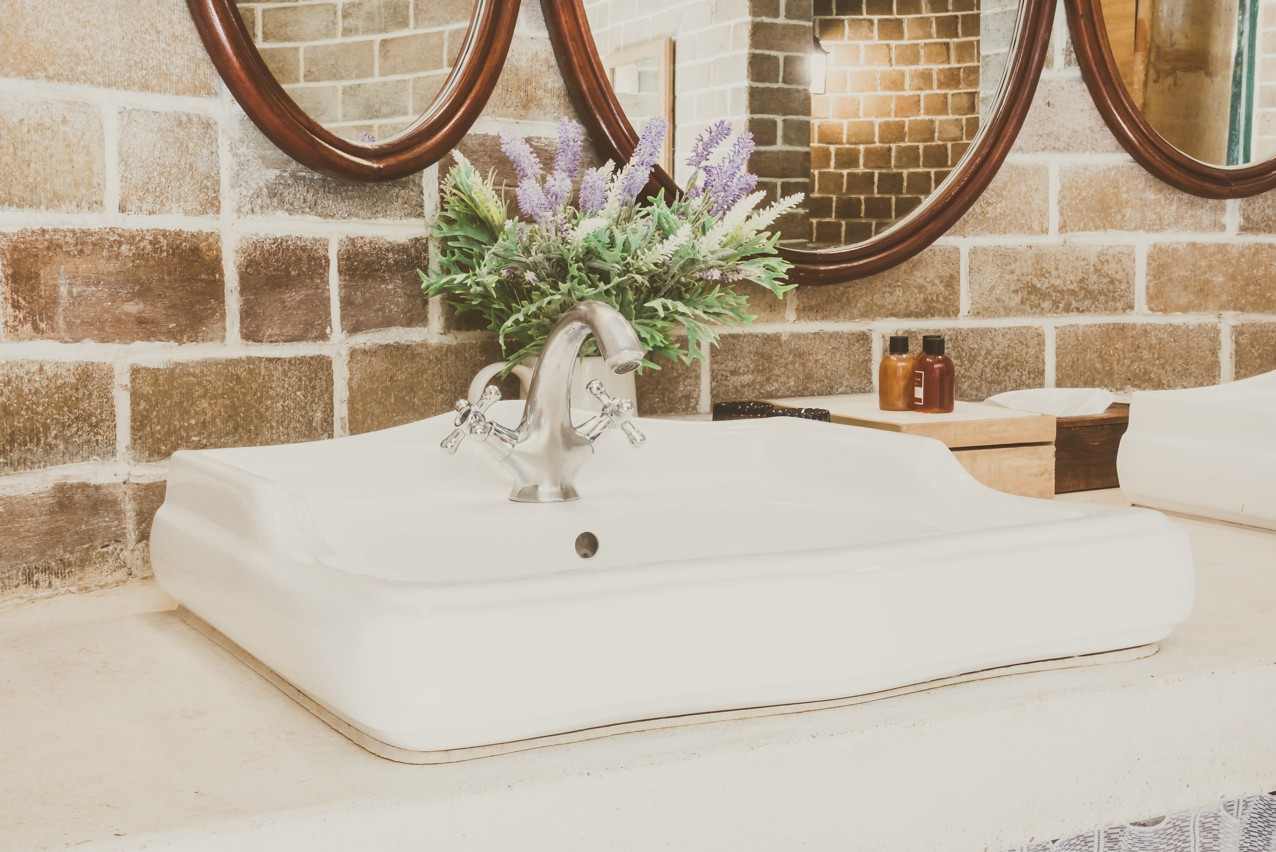
In the hierarchy of bathroom decisions, the sink tends to rank near the bottom. People agonize over tile, deliberate over vanities, and then pick a sink almost as an afterthought. This is backwards. The sink is used more often than almost anything else in the room, and its shape, mounting, and material affect comfort and cleaning every day. It rewards more attention than it typically receives.
Knowing the main types
A sensible choice starts with understanding the options. The undermount sink attaches beneath the countertop, creating a seamless transition that makes wiping the counter effortless, since water and debris sweep straight into the basin with no lip to catch them. It is the most practical everyday choice and the easiest to keep clean.
The vessel sink sits on top of the counter like a bowl, making a bold, contemporary statement and becoming a focal point in its own right. The integrated sink is molded from the same material as the countertop in one continuous piece, eliminating every seam where water could seep. Pedestal and wall-mounted sinks suit small powder rooms where saving floor space matters more than storage. Anyone comparing these configurations and their dimensions can read more about which style suits a given installation before committing, which is wise given how differently each behaves in daily use.
Maintenance should weigh as heavily as looks
Sink choices are usually made on appearance, when maintenance deserves equal billing. A vessel sink, however striking, creates a joint around its base where water and limescale collect, demanding regular cleaning to prevent buildup and mildew. The integrated sink, with no seams at all, wipes clean in seconds. Over years of daily use, this difference in upkeep adds up to real time and effort.
Material matters too. Porcelain and ceramic resist stains and clean easily, which explains their enduring popularity. Composite materials allow bolder shapes but some scratch or dull more readily. A homeowner who dreads scrubbing will favor smooth, seamless surfaces, while one who prioritizes a decorative statement will accept a bit more maintenance. Being clear about your own tolerance for cleaning saves regret later.
Ergonomics you feel every day
Sink depth and height determine how comfortable the sink is to use, and these details never show up in a photograph. A shallow basin splashes water onto the counter and user. A basin set too low forces stooping. These irritations, invisible at purchase, become daily frustrations once the bathroom is in service. Thinking about who will use the sink, how often, and for what makes the difference.
In a family bathroom, a deeper basin contains splashing and handles heavy use. In a powder room, a compact sink suffices. Faucet compatibility is part of this equation too: a tall vessel sink needs a correspondingly tall faucet, or hand-washing becomes awkward. These pairings between sink and faucet should be confirmed before purchase, not discovered afterward. A mismatched faucet and sink can ruin the comfort of an otherwise handsome installation.
The sink as a design element
Practicality comes first, but the sink also shapes the room’s character. A clean, white, undermount basin recedes into a minimalist scheme, letting other elements shine. A stone or colored-glass vessel sink becomes a centerpiece that sets the tone for the entire space. The choice should harmonize with the vanity and the room’s overall style rather than fighting it.
A contemporary vessel sink perched on a traditional vanity creates visual dissonance, while a well-matched sink reinforces the coherence of the whole. Coordinated collections from retailers like IKEA or specialty suppliers ease this harmonizing by offering sinks designed to pair with specific vanities. Choosing within a considered range, rather than grabbing a sink in isolation, keeps the room feeling unified.
Single or double basins
In a shared primary bathroom, the double-sink question comes up often. Two basins eliminate the morning traffic jam and noticeably improve comfort for a couple or a family. But they demand a countertop wide enough to accommodate them, generally at least a metre and a half, plus the plumbing to match. Cramming two sinks into a narrow vanity sacrifices all the counter space, which can backfire.
The alternative of a single generous sink in a spacious counter sometimes offers more flexibility than expected. It preserves working surface while still serving shared use, provided schedules do not overlap too heavily. The right answer depends on how many people use the room and whether they need it at the same time. There is no universal winner, only the configuration that fits a particular household.
The drain and overflow details
Beneath the aesthetics lie technical considerations that catch people off guard. The drain assembly, the mechanism at the bottom of the basin, comes in several styles. Some operate with a lift rod, others with a simple push. The drain must be compatible with both the sink and the faucet, or you end up with parts that refuse to fit together. Confirming this compatibility before purchase prevents a frustrating trip back to the store mid-installation.
The overflow adds another wrinkle. That small opening near the top of the basin prevents water from spilling over if the sink fills too far. Not every sink has one, and the drain type must match the presence or absence of that overflow. A sink without an overflow requires a specific drain that lets water pass differently. These purely technical details lack any glamour, but ignoring them turns a simple job into a headache. A knowledgeable supplier flags these pairings at the point of sale, sparing the buyer an avoidable return.
Counter space around the basin
A sink’s comfort depends partly on the counter around it. A basin that swallows nearly all the available surface leaves nowhere to set a toothbrush, soap, or a small kit. A sink of reasonable size, framed by enough working surface, makes the room far more practical day to day. This balance between basin size and surrounding space should be weighed before buying, not discovered afterward when the counter feels uselessly cramped.
Small element, lasting impact
The sink illustrates a truth that runs through every good renovation: the small elements, taken together, define the experience of a room. A well-chosen sink, suited to its use, easy to clean, and visually harmonious, quietly contributes to the daily pleasure of the bathroom. A poor choice nags at the user every day, often without them quite identifying the source of the irritation.
Taking the time to think through this detail, to compare configurations and confirm compatibilities, transforms an afterthought into an informed decision. In a successful bathroom, every element has been considered for real use rather than for the catalog photo alone. The humble sink, modest as it is, is no exception to that rule, and treating it accordingly is what separates a bathroom that merely functions from one that genuinely works.